Request a Quote
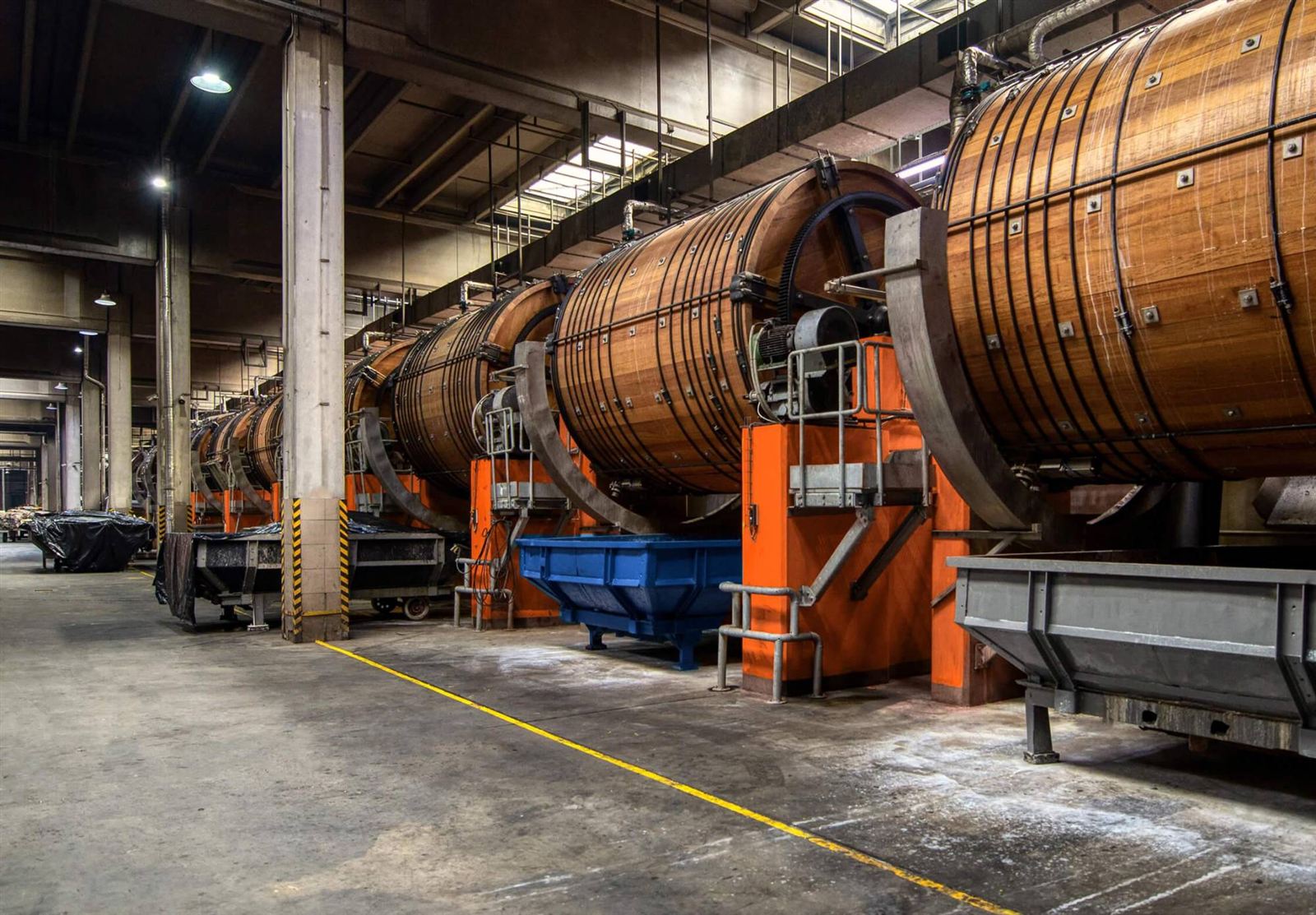
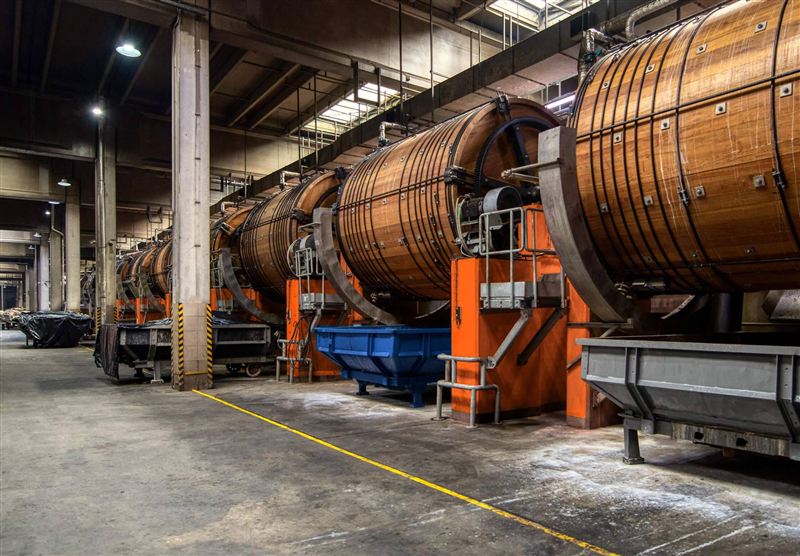
Row of large wooden tanning drums on orange supports along a tannery floor

Materials knowledge

Leather Tanning: Complete Process, Methods & Industrial Applications

Discover how raw hides and skins are transformed into durable, flexible leather through preparation, tanning, conditioning, and finishing.

Tanning is the chemical step that turns a perishable animal hide into a stable material. It decides much of how leather later behaves: how soft it feels, how it handles heat and water, how it takes colour and how it performs when it is cut and stitched into products such as work gloves. This guide explains each stage in plain technical language, compares the main tanning methods and sets out what buyers should confirm when they source tanned leather.

The basics

What Is Leather Tanning?

Leather tanning is the treatment of animal hides and skins with tanning agents so that the protein structure of the skin becomes permanently stable. After tanning, the material no longer decomposes the way raw skin does, it keeps its flexibility after drying, and it withstands far higher temperatures before it shrinks.

Why untreated hides deteriorate

A fresh hide is mostly water and protein. Left untreated, bacteria and enzymes begin to break it down within hours, which is why hides are cured (usually salted or chilled) soon after removal. If a raw hide is simply dried, it becomes hard and horn-like; once it gets wet again it softens and can start to putrefy. Neither state is useful for durable products.

The role of collagen stabilisation

The usable part of a hide is a dense, three-dimensional network of collagen fibres. Tanning agents bond to reactive sites on the collagen chains and link neighbouring chains together. These cross-links stop the fibres from sticking together when the leather dries, make the protein resistant to microbial attack and raise its shrinkage temperature, the temperature at which the fibre structure collapses in hot water. Untreated collagen typically shrinks at roughly 60–65 °C. Chrome-tanned leather typically withstands more than 100 °C, while vegetable- and aldehyde-tanned leathers usually sit somewhere between the two.

Cross-section of a bovine hide Diagram showing the grain layer with hair follicles at the top, the thick corium of interwoven collagen fibre bundles in the middle, and the flesh layer at the bottom. A dashed line marks where a hide can be split into a grain layer and a split. Grain layer fine, tight fibres; the outer leather surface Split line grain layer above, split below Corium thick network of collagen fibre bundles Flesh layer removed in fleshing Simplified illustration, not to scale
The grain layer gives leather its surface and much of its strength. Thick hides are often split so the grain layer and the lower split can be used for different products.

Rawhide, tanned leather and finished leather

Rawhide

Cleaned, dehaired and dried hide that has not been tanned. Stiff and strong when dry, but it softens and can decompose when wet. Used for items such as drum heads and some traditional goods.

Tanned leather (crust)

Hide that has been tanned, and often retanned, dyed and lubricated, then dried. The collagen is now stable. Leather at this stage, before surface finishing, is called crust.

Finished leather

Crust leather that has been mechanically softened and given its final surface: buffing, coatings, embossing or other treatments chosen for appearance and performance in the end product.

From hide to leather

How Leather Is Tanned: Step-by-Step

The sequence below is the common outline for bovine hides. The exact order, the chemicals and which steps are used at all vary with the animal, the tanning method and the leather being made.

  1. BeamhouseSteps 1–7 · clean and open the hide
  2. TanyardStep 8 · stabilise the collagen
  3. Post-tanning (wet end)Steps 9–10 · set character, colour, softness
  4. Drying & finishingSteps 11–13 · shape, surface, inspect
  1. 01

    Raw hide and skin selection

    Purpose: choose raw material that fits the intended leather.

    Hides and skins are sorted by species, origin, weight, size and visible defects such as scratches, insect damage, brand marks or poor preservation.

    Effect on leather: the raw material sets the limits for thickness, surface quality, usable area and strength. Later processing cannot fully hide poor raw material.

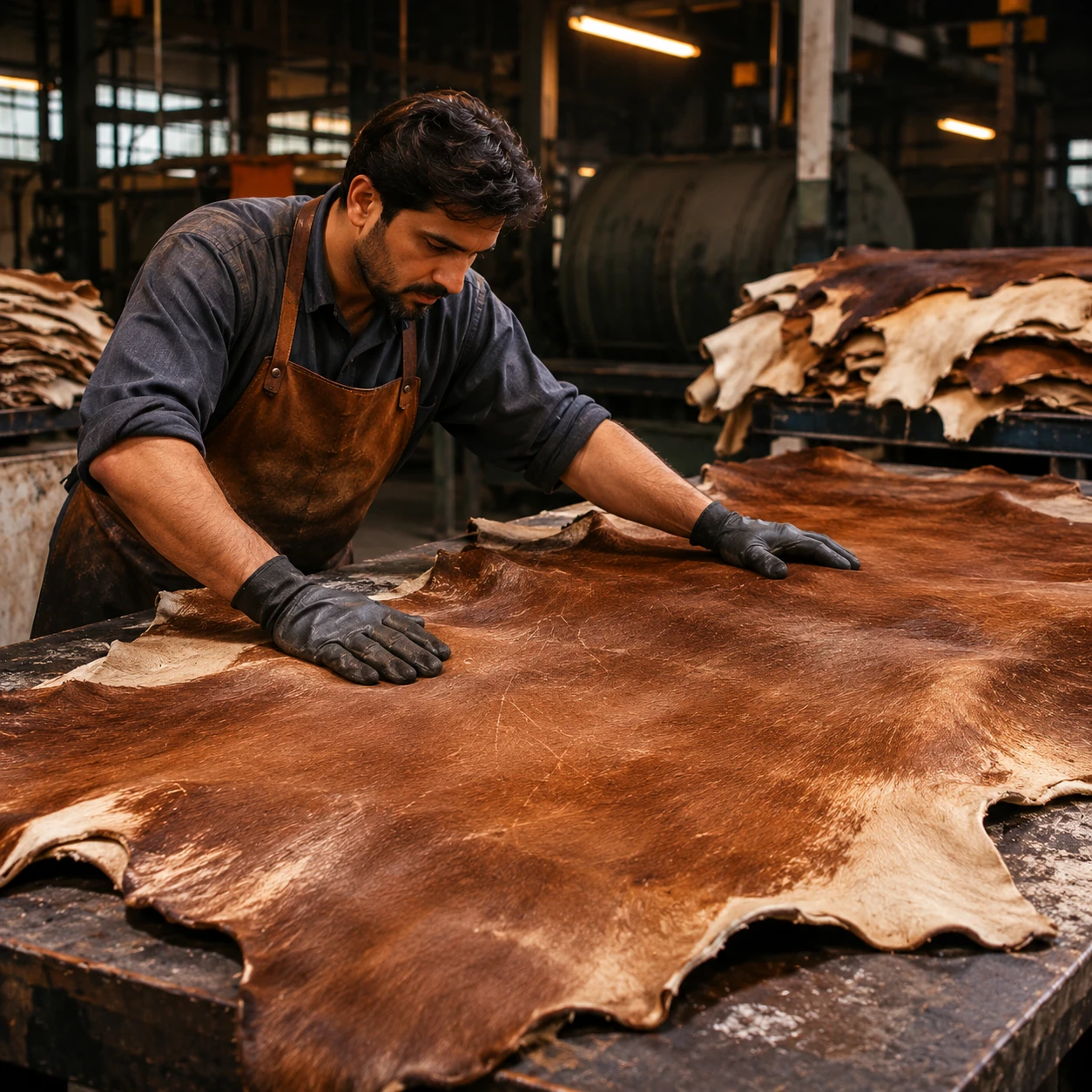
    Worker in a leather apron and gloves inspecting a raw hair-on cattle hide spread on a workbench, with stacked hides behind
    Raw hides are inspected and sorted by size, weight and visible defects before processing.
  2. 02

    Preservation and curing

    Purpose: stop decomposition between the slaughterhouse and the tannery.

    The most common method is salting (dry salt or brine), which draws water out and slows bacteria. Chilling, drying and other preservatives are also used, depending on distance and time to processing.

    Effect on leather: poor curing causes grain damage, hair slip and weak spots that show up in the finished leather.

    Two workers spreading salted raw hides into a stack, with a tub of curing salt in the foreground and more salted hide stacks behind
    Salt curing: hides are layered with salt to draw out moisture and slow bacterial decay before they reach the tannery.
  3. 03

    Soaking

    Purpose: rehydrate the hide and remove salt, dirt and blood.

    Hides are washed and soaked in water, often with wetting agents and bactericides, until they return to a condition close to fresh hide.

    Effect on leather: even soaking lets later chemicals penetrate uniformly, which helps consistent softness and colour.

    Worker lifting a wet hide from a water-filled soaking pit while fresh water pours in, with a second worker and tannery drums behind
    Soaking: hides are rehydrated in water pits or drums to wash out curing salt and dirt.
  4. 04

    Liming and unhairing

    Purpose: remove hair and epidermis and open up the fibre structure.

    Hides are treated in an alkaline bath, traditionally lime with sodium sulphide or hydrosulphide. Hair is either dissolved (hair-burn) or loosened and recovered (hair-save). The alkali also swells the hide and removes some fats and non-collagen proteins.

    Effect on leather: the degree of liming strongly influences the final balance between firmness and softness.

    Two workers in safety glasses guiding a swollen, pale limed hide as a hoist lifts it dripping from a milky liming pit
    Liming: after the alkaline bath the hide is dehaired, pale and swollen, ready for fleshing.
  5. 05

    Fleshing

    Purpose: remove fat, flesh and connective tissue from the underside.

    A fleshing machine passes the hide between rollers and a bladed cylinder. Thick hides may also be split at this stage (lime splitting), separating the grain layer from the lower split.

    Effect on leather: clean, even fleshing helps tanning agents penetrate uniformly and improves thickness consistency.

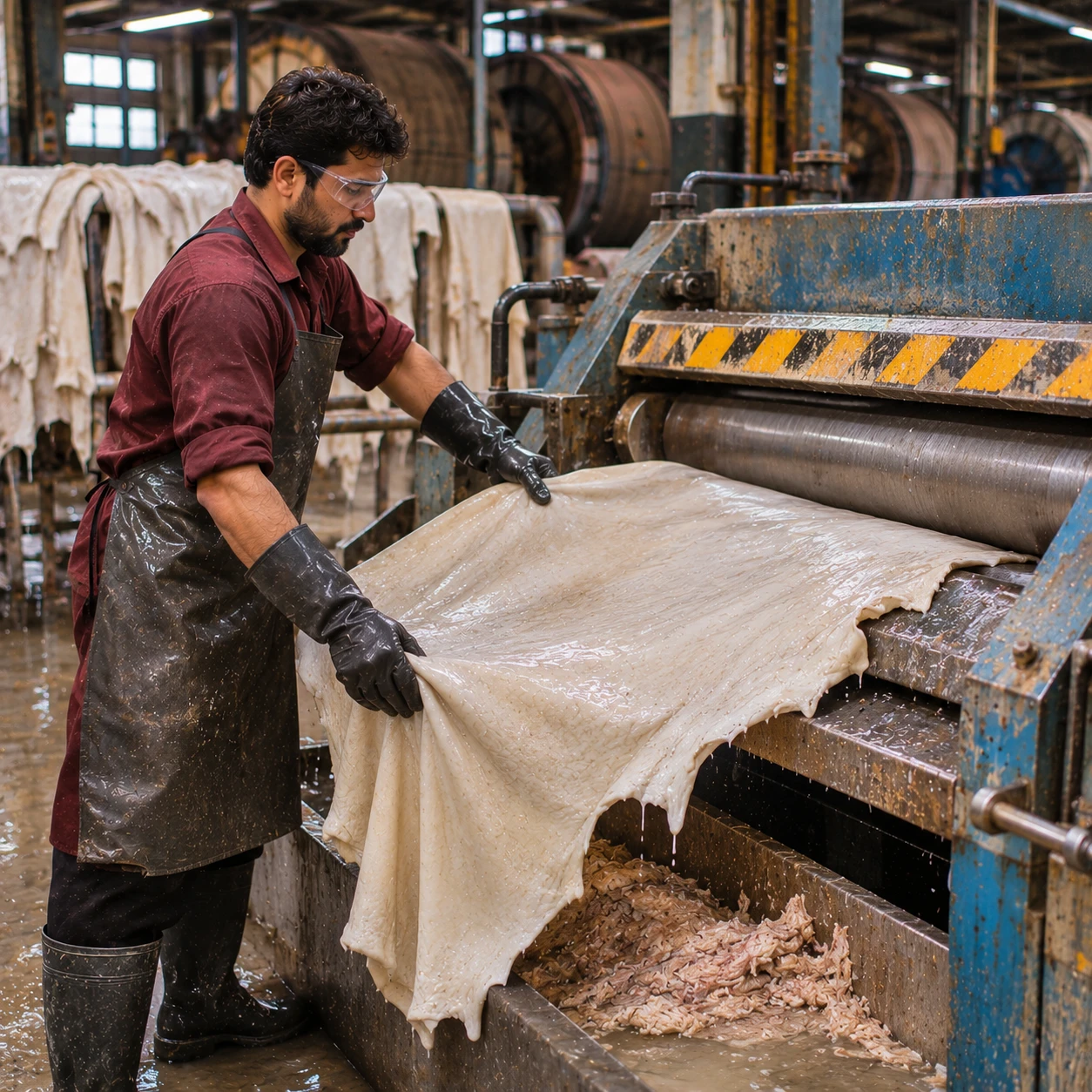
    Worker in safety glasses feeding a pale limed hide into a roller fleshing machine, with removed flesh collecting in the trough below
    Fleshing: a roller machine strips fat and flesh from the underside of the limed hide.
  6. 06

    Deliming and bating

    Purpose: bring the pH down from strongly alkaline and refine the fibre structure.

    Deliming agents such as ammonium salts, weak acids or carbon dioxide remove lime and reduce swelling. Bating then uses enzymes to remove remaining non-collagen proteins.

    Effect on leather: bating is a main lever for a softer, smoother grain. Firm leathers may be bated lightly or not at all.

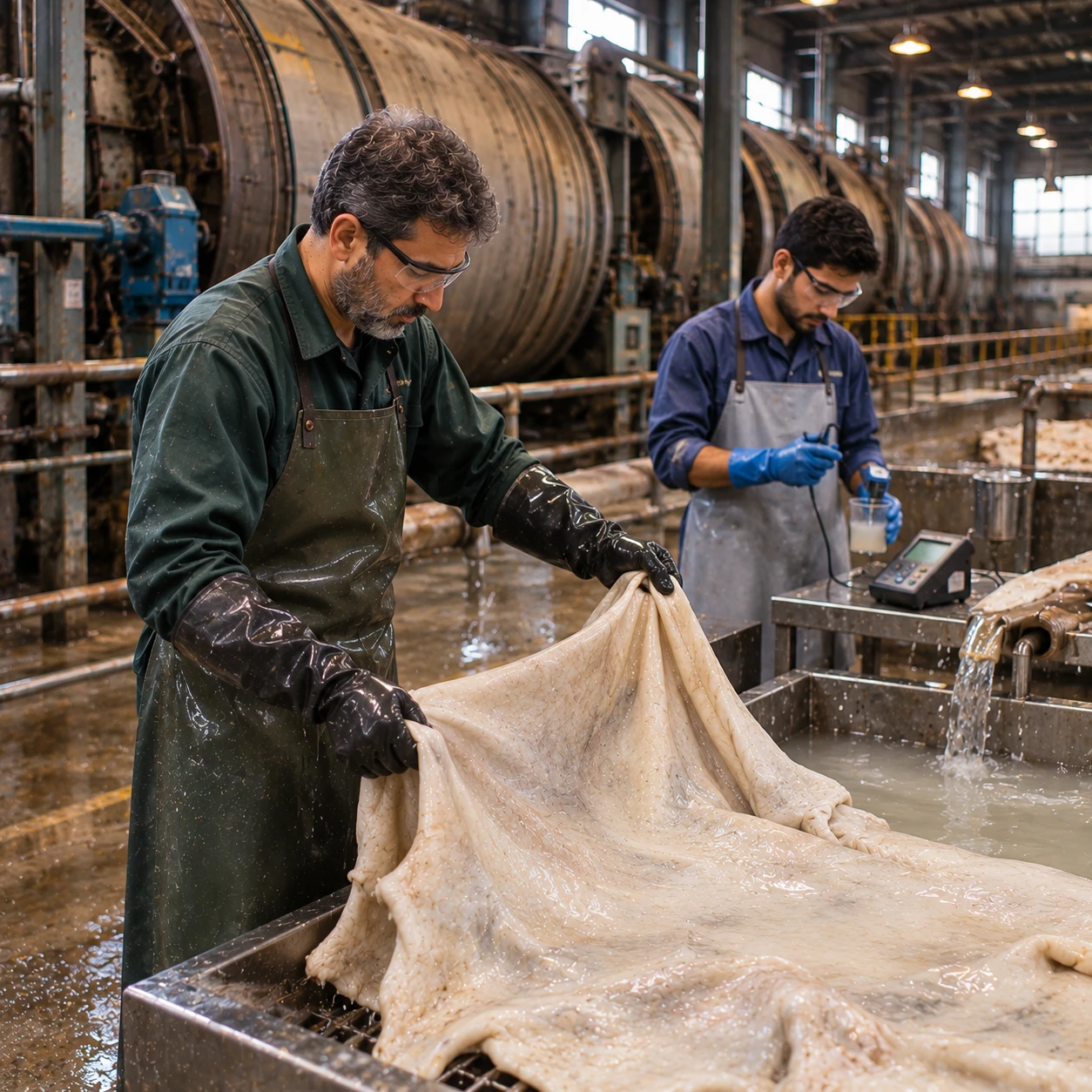
    Worker handling a pale delimed hide over a rinsing tank while a colleague checks a liquor sample with a pH meter, with processing drums behind
    Deliming and bating: the hide is rinsed and its pH checked as lime is removed before enzyme treatment.
  7. 07

    Pickling (where applicable)

    Purpose: prepare the hide chemically for tanning.

    Salt and acid bring the hide to a low pH so that mineral tanning agents, especially chromium, can penetrate evenly before they bind. The salt prevents the acid from swelling the fibres. Some vegetable and chrome-free processes use little or no pickle.

    Effect on leather: correct pickling helps even tannage through the full thickness.

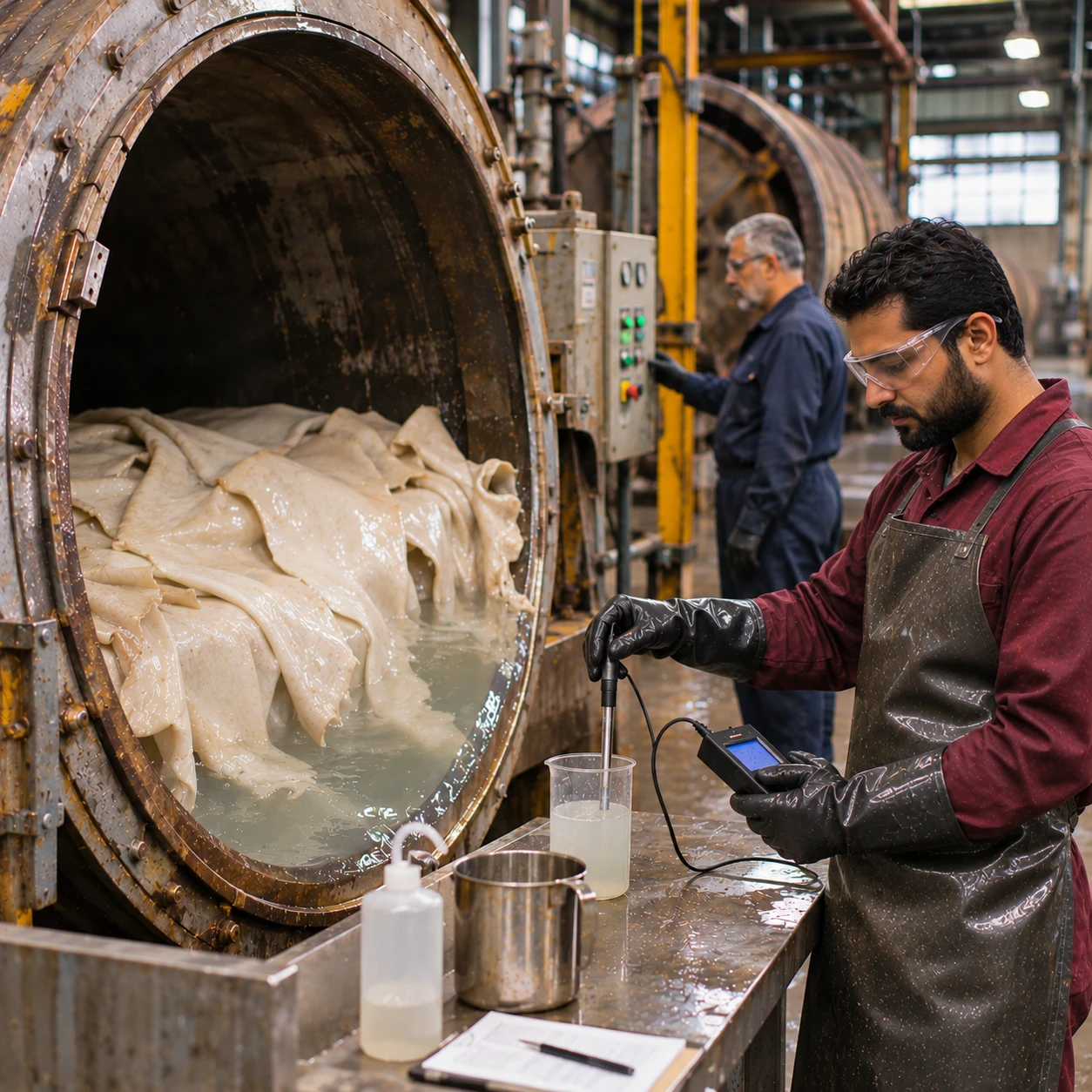
    Worker testing a liquor sample with a pH meter beside an open drum filled with pale hides, while a colleague operates the drum control panel
    Pickling: the pH of the drum liquor is tested to confirm the hides are ready for tanning.
  8. 08

    Tanning

    Purpose: permanently stabilise the collagen.

    Hides are turned in rotating drums (or, for some vegetable tanning, held in pits) with the tanning agent. In chrome tanning the pH is then raised gradually (basification) so the chromium fixes to the collagen. The result is called wet blue. Chrome-free tannages give wet white, and vegetable tanning gives a naturally tan-coloured leather.

    Effect on leather: the tanning method sets the base character: heat stability, firmness, how the leather ages and which finishes it suits.

    Wooden tanning drums with drive gears in a tannery
    Rotating drums keep hides and liquor moving so tanning agents penetrate evenly.
  9. 09

    Retanning

    Purpose: adjust the leather's fullness, firmness and grain character.

    After tanned leather is wrung out (sammed) and shaved to an even thickness, it goes back into the drum with a second tanning agent, such as vegetable extracts, synthetic tannins (syntans), resins or more chrome.

    Effect on leather: retanning can fill looser areas, tighten the grain, improve buffing and fine-tune softness for the end use.

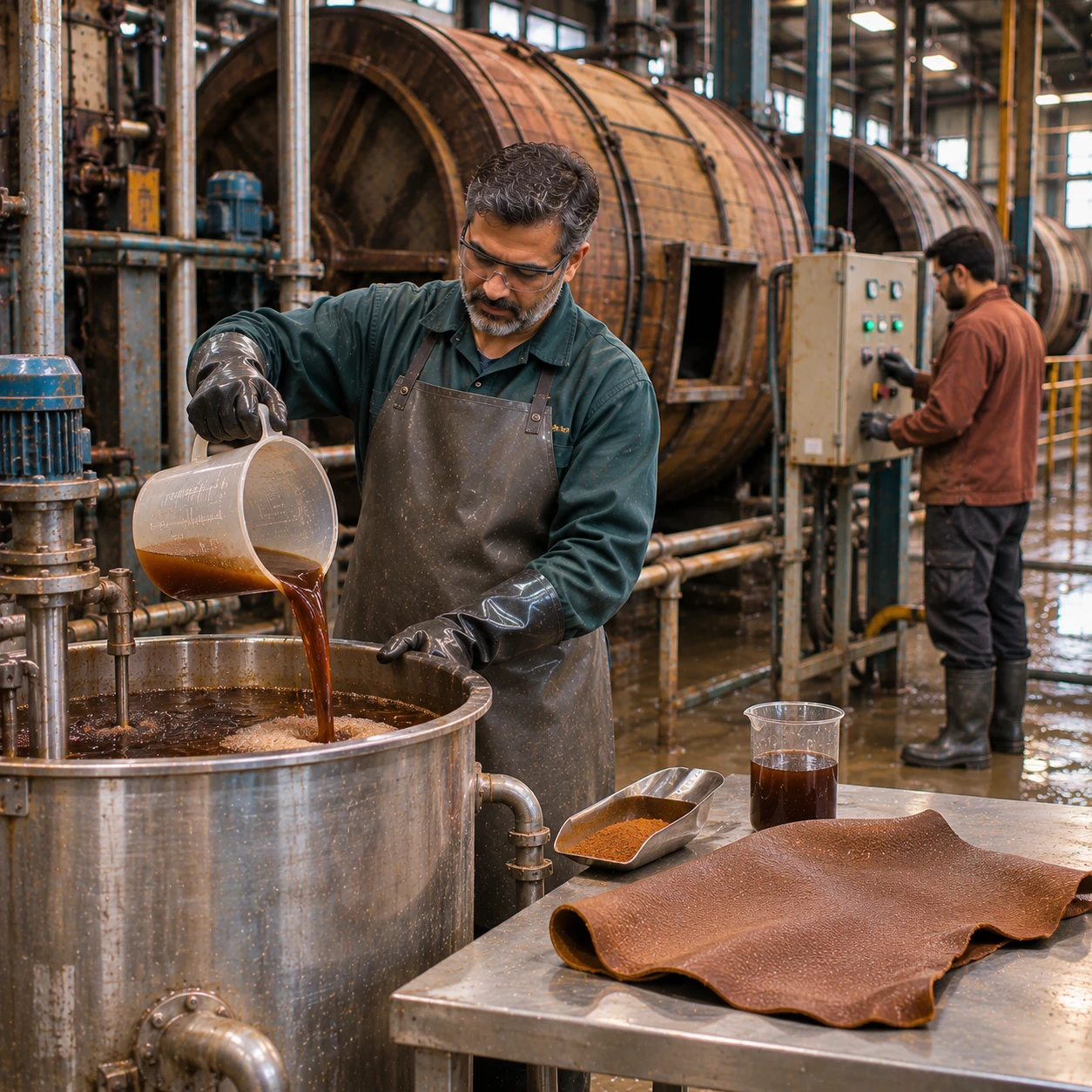
    Worker pouring brown retanning liquor into a stirred mixing tank, with tanning extract powder and a leather sample on the bench and drums behind
    Retanning: a second tanning liquor, here a brown extract, is prepared and fed to the drum to adjust fullness and grain.
  10. 10

    Dyeing and fatliquoring

    Purpose: give the leather its colour and lubricate the fibres.

    Dyes are drummed into the leather, usually in the same sequence as retanning. Fatliquors, which are emulsified oils, coat the fibres so that they can slide past each other once the leather is dry.

    Effect on leather: fatliquoring is one of the biggest factors in softness, flexibility and tear behaviour. Without it, leather dries hard.

    Worker pulling a wet, dyed reddish-brown hide from an open processing drum, with a beaker of milky fatliquor emulsion on the bench and dyed hides stacked nearby
    Dyeing and fatliquoring: hides leave the drum coloured, with a milky fatliquor emulsion used to lubricate the fibres.
  11. 11

    Drying and conditioning

    Purpose: remove water in a controlled way and bring the leather to a stable moisture level.

    Methods include setting out, vacuum drying, toggling on frames and hang drying on overhead conveyors. The leather is then conditioned to a set moisture content before mechanical work.

    Effect on leather: the drying method affects area yield, flatness, firmness and handle.

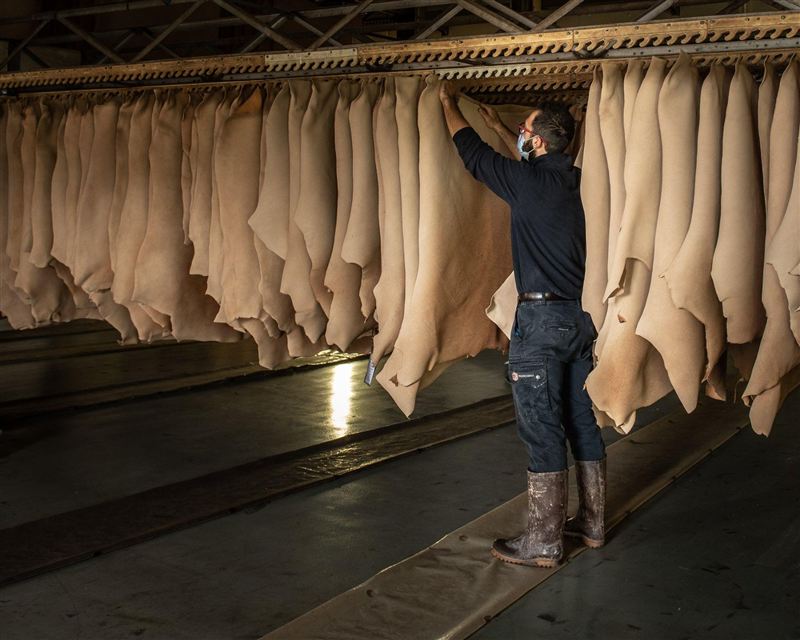
    Tannery worker adjusting natural-coloured hides hanging from an overhead drying conveyor
    Hang drying: hides are suspended from an overhead conveyor to dry slowly and evenly.
  12. 12

    Splitting and shaving (where appropriate)

    Purpose: reach the required, even thickness.

    If the hide was not split in the lime, it is usually split after tanning. Shaving machines then take the leather to a precise thickness. These operations normally happen in the wet state, between tanning and retanning. They are listed here because the final thickness is confirmed before finishing.

    Effect on leather: consistent thickness matters for cutting, stitching and the feel of products such as gloves.

    Worker feeding a brown leather hide through a shaving machine, with shavings collecting in a bin, while a colleague measures leather thickness with a digital gauge
    Shaving: a machine takes the leather to an even thickness, checked with a thickness gauge.
  13. 13

    Surface finishing and quality inspection

    Purpose: give the final surface and confirm the leather meets specification.

    Leather is softened (staking, milling), may be buffed, coated, embossed or plated, then measured for area, graded and inspected for colour, thickness and defects.

    Effect on leather: finishing sets appearance, surface resistance and handle. Grading decides which products each hide is suited for.

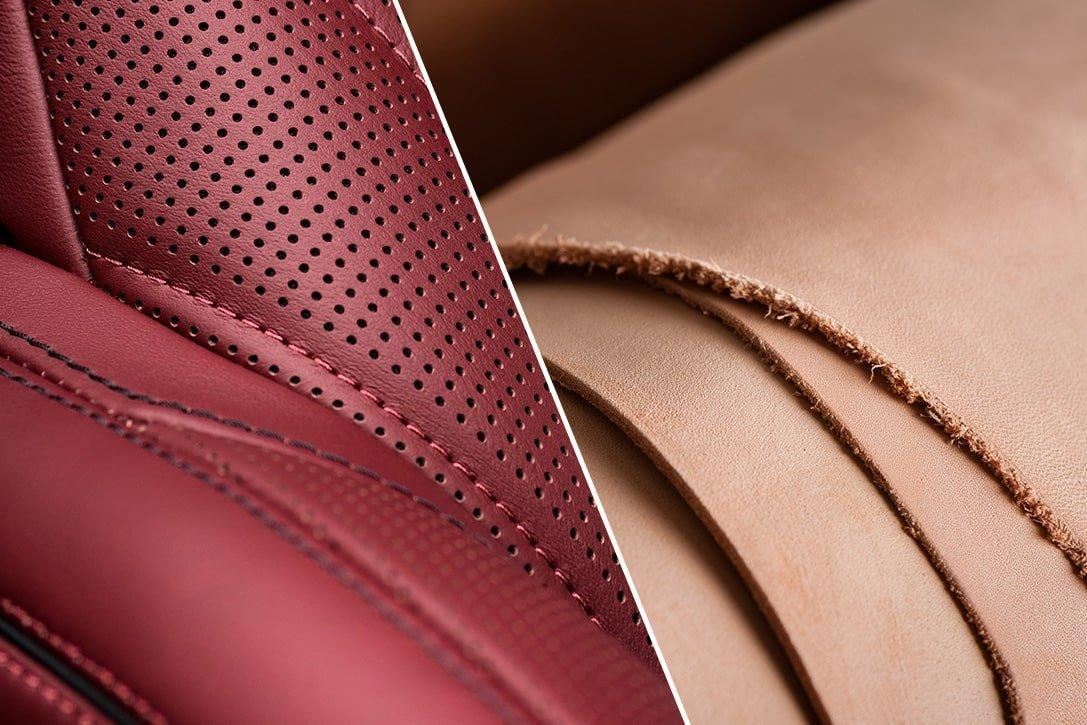
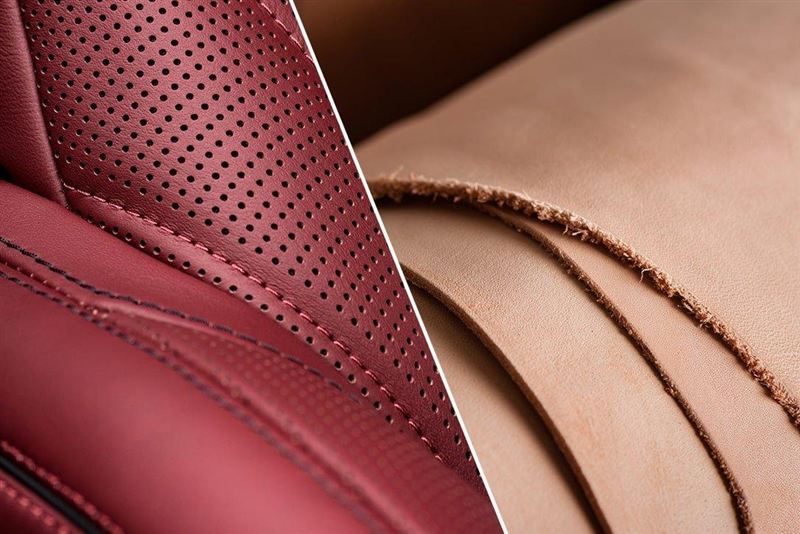
    Dyed, perforated and stitched red finished leather beside layers of natural undyed leather
    Finishing can change leather completely: dyed and perforated leather (left) beside natural, unfinished leather (right).

Tanning chemistry

Main Types of Leather Tanning

Each method changes the hide in a different way. None of them is "best" overall: the right choice depends on the product, the performance needed and the processing capability of the tannery.

Vegetable Tanning

Vegetable tanning uses tannins, which are polyphenolic compounds extracted from plant materials such as mimosa and chestnut bark or wood, quebracho wood and tara pods. The tannins bind to the collagen mainly through hydrogen bonding and fill the fibre structure. The process is slower than chrome tanning: depending on the method and the thickness of the leather, it can take from days in drums to several weeks or longer in pits.

Typical properties
Firm, full and mouldable; natural tan to brown colour; develops a patina as it ages; takes tooling and burnished edges well.
Benefits
Suits structured products; can be shaped when damp; uses renewable tanning materials; no chromium in the tannage.
Limitations
Lower heat resistance than chrome leather; more prone to water marks and stiffening after wetting; colour can darken with light; longer processing generally raises cost.
Common applications
Sole leather, belts, saddlery and harness, straps, wallets and other structured leather goods.
Chrome Tanning

Chrome tanning uses trivalent chromium salts, usually basic chromium sulphate, which form strong bonds with the collagen. It is the most widely used method worldwide. Industry estimates of its share range from about three-quarters to more than 80 % of leather production. The tanning step itself is fast, typically completed within hours to about a day in the drum.

Typical properties
Soft and supple; high heat stability; good tensile and tear strength; wide range of colours; keeps its shape and flexibility after wetting better than most vegetable leather.
Benefits
Fast, consistent and versatile; suitable for thin, soft leathers and for split leather; a good base for many finishes.
Limitations
Requires careful chemical management, wastewater treatment and handling of chromium-containing solid waste; does not develop the same patina as vegetable leather.
Common applications
Footwear uppers, garments, upholstery, bags and most work glove leather.
Trivalent vs hexavalent chromium

Tanning uses chromium in its trivalent form, Cr(III). Hexavalent chromium, Cr(VI), is a different and hazardous form. It is not a tanning agent, but under some conditions Cr(III) in finished leather can oxidise into Cr(VI), for example through unsuitable fatliquors, high pH or ageing with heat and light. Tanneries prevent this through process control and suitable chemicals. In the EU, leather articles that come into contact with the skin must not contain Cr(VI) at or above 3 mg/kg, measured by EN ISO 17075 (REACH Annex XVII, entry 47, in force since 2015).

Chrome-Free Tanning

"Chrome-free" means only that no chromium is used in tanning. It is not one method but a group of different chemistries: vegetable tannins, aldehydes, synthetic tannins, other mineral salts (for example aluminium, zirconium or titanium) and polymer-based systems, often in combination. Hides tanned this way without vegetable tannins are commonly called wet white. "Metal-free" is a narrower claim, since some chrome-free systems still use metals.

Where it is used
Automotive interiors and other markets where customers specify chromium-free leather, and some footwear, garment and furniture leathers.
Trade-offs
Performance depends heavily on the specific chemistry. Some systems give lower heat stability or light fastness than chrome. Others may introduce their own handling or effluent challenges. "Chrome-free" alone says nothing about environmental performance.

Aldehyde and Synthetic Tanning

Aldehyde tanning uses agents such as glutaraldehyde or modified aldehydes, which form covalent cross-links with the collagen. Synthetic tannins (syntans), such as phenolic or naphthalene-based condensation products, are mainly used in retanning to fill and tighten leather. Some replacement syntans can also act as the main tannage.

Typical industrial uses
Wet-white pre-tannage before splitting and shaving; chrome-free automotive and furniture leather; retanning in almost every leather type (syntans).
Important limitations
Aldehyde leathers usually have a lower shrinkage temperature than chrome leather. Some aldehyde tannages can yellow on exposure to light. Glutaraldehyde must be handled carefully, and residual aldehyde can disturb biological wastewater treatment.

Oil and Traditional Tanning Methods

True oil tanning uses unsaturated oils, traditionally fish oils, that oxidise inside the skin and stabilise the fibres. It produces very soft, absorbent chamois leather, usually from the flesh split of sheepskin. Brain tanning is a historical method in which fats and emulsifiers soften the skin and smoke adds further stabilisation. Both are now specialist methods.

Oil-tanned or oil-finished?

Many leathers sold as "oiled" or "oil-tanned" for boots and workwear are tanned with chrome, vegetable tannins or a combination, and then stuffed with oils and waxes during finishing. That is oil finishing, not oil tanning. Ask suppliers which tannage was actually used.

Combination tanning: many commercial leathers use more than one method, for example chrome tanning followed by vegetable retanning. This combines the softness and heat stability of chrome with the fullness and firmness of vegetable tannins.

Side by side

Vegetable vs Chrome vs Chrome-Free Leather

General tendencies only. Real performance depends on the formulation, the hide, retanning, finishing and the product's construction.

Comparison of vegetable-tanned, chrome-tanned and chrome-free leather
CharacteristicVegetable-tannedChrome-tannedChrome-free (wet white)
Tanning chemistryPlant polyphenols (tannins)Trivalent chromium saltsAldehydes, syntans, other minerals or polymers, often combined
Relative processing timeLongest; days in drums to weeks in pitsShortest; tanning step in hours to about a dayUsually similar to or slightly longer than chrome
Typical flexibilityLower to moderateHighModerate to high, depending on system
FirmnessFirm, full, holds shapeSoft to mediumVariable
Colour possibilitiesNatural tan base; deeper, earthier shadesPale blue-grey base; widest colour rangeOff-white base; good for pale and bright colours
Water-related behaviourMarks easily; can stiffen after wettingRecovers well after wetting; not waterproof without treatmentVariable; depends on chemistry and finish
Heat stabilityModerateHighUsually lower than chrome
AgeingDarkens and develops patinaChanges little in appearanceSome types can yellow with light
Typical applicationsSoles, belts, saddlery, structured goodsFootwear, garments, upholstery, work glovesAutomotive, furniture, specified chrome-free goods
Cost considerationsOften higher, due to time and materialsGenerally most economical at scaleOften higher than chrome
Environmental considerationsRenewable tannins, but high organic load in wastewater and long processingChromium must be managed, recovered where possible and kept as Cr(III)No chromium; other chemicals need their own management

Industrial applications

Leather Tanning for Industrial Work Gloves

For glove leather, tanning is the starting point, not the whole story. Performance comes from the combination of leather selection, tanning, post-tanning, finishing, glove construction and testing.

How tanning and finishing influence glove performance

  • Flexibility and dexterity: fatliquoring, softening and thickness determine how easily the glove bends and how well the wearer can grip small parts.
  • Softness and hand feel: liming, bating and fatliquoring set how the leather feels against the skin and after repeated wear.
  • Abrasion performance: depends mainly on fibre structure (grain or split), thickness and density, as well as on any surface finish.
  • Moisture behaviour: tannage and finishing affect how the leather absorbs sweat or water and whether it stays soft after drying. Water-repellent treatments change this further.
  • Thickness consistency: splitting, shaving and grading keep each pair consistent, which affects fit, cutting yield and protection.
  • Stitching suitability: leather that is too loose, too dry or uneven can tear at seams. Retanning and correct lubrication improve stitch holding.
  • Comfort and durability: heat stability, softness retention and tear strength together decide how long a glove stays wearable.

Most leather work gloves are made from chrome-tanned leather, because it combines softness, strength and heat stability. Heat-related applications such as welding usually rely on thicker split leather.

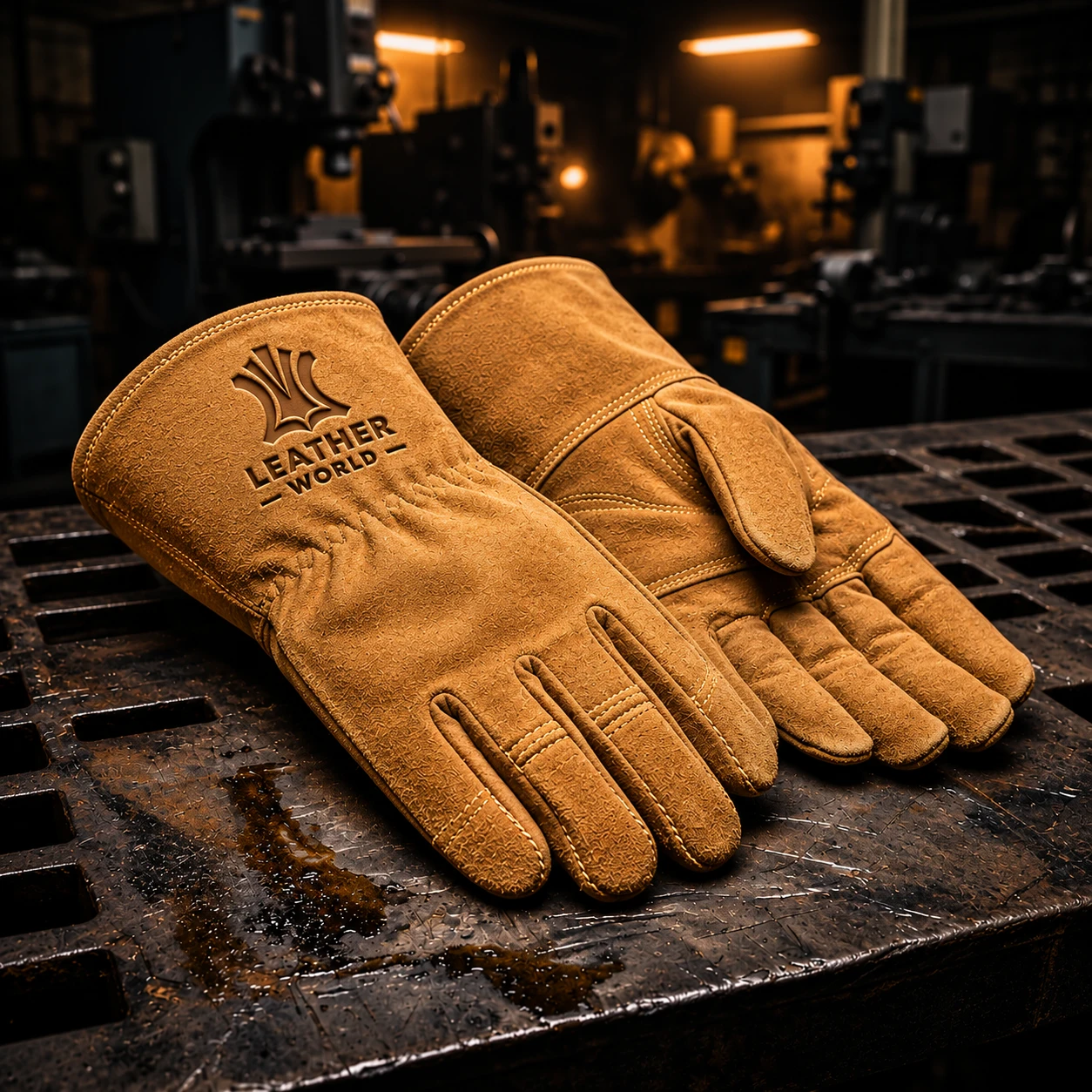
Pair of tan suede leather work gloves with an embossed LEATHER WORLD logo on a steel workshop grate
Suede leather work gloves with the LEATHER WORLD logo embossed on the cuff.

Leathers commonly used in work gloves

Cowhide grain

The outer grain layer of cattle hide. Widely used for driver and general-purpose gloves for its balance of abrasion resistance, durability and comfort.

Cowhide split

The lower layer left after splitting. It has no grain surface, is usually thicker and rougher, and is common in welding, heavy-duty and economical work gloves. Generally less strong than grain leather of the same thickness.

Goatskin

Naturally rich in lanolin, supple and strong for its thickness. Often chosen where dexterity matters, such as in driver and fitting gloves.

Sheepskin

Very soft with fine tactile feel. Hair sheep leather (cabretta) is popular for precision and mechanics' gloves. Sheepskin generally has lower tear strength than cowhide or goatskin, so it suits lighter work.

Pigskin

Porous and breathable, with good abrasion resistance. Pigskin is often described as staying relatively soft after it gets wet.

Deerskin, elk and buffalo

Used in some premium or specialist gloves. Deerskin is valued for softness and comfort. Buffalo and elk are heavier and used where extra robustness is needed.

About protection ratings

Ratings such as EN 388 (mechanical risks), EN 407 (heat), EN 12477 (welding) or ANSI/ISEA 105 apply to a specific, finished glove and are only valid when that glove has been tested. They cannot be inferred from the tanning method or leather type. EN ISO 21420, which sets general requirements for protective gloves, also includes chemical requirements for leather, such as limits on chromium VI content and on pH.

See how these materials are used in our Work Gloves range, including Leather Driver Gloves, Welding Gloves and Mechanic Gloves.

After the tan

Leather Finishing After Tanning

Tanning makes leather stable. The post-tanning and finishing stages make it fit for a particular product. Two leathers from the same tannage can look and perform very differently depending on how they are finished.

Retanning
A second tannage that adjusts fullness, firmness and grain tightness.
Dyeing
Gives colour through the leather or on the surface. Aniline leathers are dyed only; semi-aniline and pigmented leathers add coloured coatings.
Fatliquoring
Lubricates fibres for softness and flexibility, and influences tear strength.
Drying
Removes water. The method affects area, flatness and handle.
Softening and staking
Mechanically flexes the dried leather to break fibre adhesion. Milling tumbles leather in a drum for a softer, more relaxed feel.
Buffing
Abrades the surface to create nubuck (grain side) or suede (flesh side), or to correct grain defects before coating.
Embossing
Presses a pattern into the surface with heat and pressure, from a smooth plate to a textured grain.
Surface coating
Binders, pigments and topcoats add colour uniformity, rub resistance, water resistance or a chosen gloss level.
Final inspection
Measuring, grading and checks of colour, thickness and defects against the agreed specification.
Close-up of red perforated finished leather next to stacked natural leather with raw edges
Finishing changes colour, surface and function: perforated, dyed and stitched leather beside natural leather with raw edges.

Responsibility

Environmental Responsibility in Leather Tanning

Tanning is chemically and water intensive. Its environmental impact depends far more on how a tannery is run than on which tanning method is used.

Water consumption

Published figures for conventional bovine processing commonly fall between about 20 and 50 m³ of water per tonne of raw hide. Water-saving practices such as batch washing and float recycling can reduce this substantially.

Wastewater treatment

Tannery effluent can contain salt, sulphide, chromium, suspended solids and high organic load. It needs dedicated treatment. In the US, discharges are governed by EPA effluent guidelines (40 CFR Part 425). In the EU, large tanneries follow Best Available Techniques conclusions under the Industrial Emissions Directive.

Chemical management

Restricted substances lists, safety data sheets and supplier controls help keep hazardous substances out of processes and products, and protect workers.

Chromium handling

High-exhaustion tanning, chrome recovery and recycling, and Cr(VI) prevention in post-tanning reduce chromium in effluent and in leather.

Solid waste

Fleshings, trimmings, shavings and treatment sludge can be turned into products such as gelatine, collagen, fertiliser or biogas instead of going to landfill.

Process efficiency and sourcing

Energy use, chemical uptake and the traceability of hides back to their origin are increasingly part of buyer requirements.

Industry frameworks

The Leather Working Group (LWG) audits the environmental performance and compliance of leather manufacturers. Its current protocol also covers chemical management and traceability. Like any audit, it applies to the audited facility and its scope. Brands may also use restricted substances lists such as AFIRM's, and regional regulation sets legal limits for discharges and for substances in products.

A balanced view: vegetable tanning is not automatically sustainable, because its effluent can be high in organic load and it takes longer. Chrome tanning is not inherently unsafe: when Cr(III) is well managed and Cr(VI) formation is prevented, it can be run responsibly. Buyers should judge the actual tannery's practices and documentation, not the method's reputation.

Sourcing

How B2B Buyers Should Evaluate Tanned Leather

A clear specification avoids most quality disputes. Use this checklist to agree details with your supplier before sampling and bulk orders.

Sourcing checklist for tanned leather
CheckWhat to specifyWhat to confirm with your supplier
Animal speciesCow, buffalo, goat, sheep, pig or otherOrigin of hides and consistency between lots
Grain or splitFull grain, corrected grain, or splitWhich layer is supplied and whether it is coated
Tanning methodChrome, vegetable, chrome-free or combinationTannage and retannage actually used; Cr(VI) test results where relevant
ThicknessRange in mm (or oz) and toleranceMeasurement method and variation across the hide
Softness and flexibilityTarget handle, ideally against an approved sampleHow softness is measured or compared between lots
Colour consistencyColour standard and accepted toleranceLot-to-lot matching and light-fastness where needed
FinishingAniline, semi-aniline, pigmented, suede, nubuck, waxed or water-repellentCoating type and any functional treatments
Material testingTests relevant to the end use, such as tear and tensile strength, Cr(VI) and pHTest methods, accredited laboratory reports and test frequency
Traceability and documentationRequired certificates, declarations and RSL complianceTannery identity, audit status and validity dates
Intended end useThe product and conditions of useThat the leather is suitable for that product and its performance tests

Questions

Frequently Asked Questions

What is leather tanning?

Leather tanning is the chemical treatment of animal hides and skins that permanently stabilises their collagen structure, turning perishable raw skin into durable leather that resists decomposition and stays flexible after drying.

Why does leather need tanning?

Untreated hides decompose when wet and become hard and brittle when dried. Tanning cross-links the collagen fibres so the material resists microbial attack, tolerates higher temperatures and remains flexible.

What are the main types of leather tanning?

The main types are chrome tanning, vegetable tanning and chrome-free tanning. Chrome-free covers several chemistries, including aldehyde, synthetic and other mineral tanning. Oil tanning and brain tanning are specialist or traditional methods. Many commercial leathers combine more than one method.

Is vegetable-tanned leather better than chrome-tanned leather?

Neither is better in every case. Vegetable-tanned leather is firm, mouldable and develops a patina, which suits structured goods. Chrome-tanned leather is softer, more heat-stable and more versatile, which suits footwear, garments and work gloves. The right choice depends on the product.

How long does leather tanning take?

The tanning step in chrome tanning usually takes hours to about a day. Vegetable tanning can take from days in drums to several weeks or longer in pits. The full process, from raw hide to finished leather, usually takes considerably longer than the tanning step alone.

What is chrome-free tanning?

Chrome-free tanning is any tanning process that does not use chromium. It may use vegetable tannins, aldehydes, synthetic tannins, other mineral salts or polymers. Chrome-free leather tanned without vegetable tannins is often called wet white. Its properties depend on the specific chemistry used.

Which leather is suitable for industrial work gloves?

Common choices are cowhide grain for durability, cowhide split for heavy-duty and welding gloves, goatskin and sheepskin for dexterity, and pigskin for breathability. The best choice depends on the task, and actual protection levels can only be confirmed by testing the finished glove.

What is the difference between leather tanning and leather finishing?

Tanning stabilises the collagen and turns hide into leather. Finishing comes afterwards and gives the leather its final appearance and surface properties, through steps such as dyeing, softening, buffing, coating and embossing.

Can leather be waterproof?

Leather is naturally porous and is not fully waterproof. Water-repellent tanning auxiliaries, impregnation, waxes and surface coatings can make it highly water resistant, and products can add waterproof membranes. The level of resistance should be specified and tested for the intended use.

How does tanning affect leather durability?

Tanning sets the leather's heat stability and resistance to decay, and together with retanning and fatliquoring it influences strength, flexibility and how the leather ages. Durability in use also depends on the hide, thickness, finishing and product construction.

Is leather tanning environmentally harmful?

Tanning uses significant water and chemicals and produces effluent and solid waste that must be treated. Its impact depends mainly on how a tannery manages water, chemicals, chromium and waste. Well-run tanneries with proper treatment and controls reduce these impacts substantially.

What is the difference between hides and skins?

In the leather trade, hides come from large animals such as cattle, buffalo and horses, and skins come from smaller animals such as goats, sheep and pigs. Calfskin and kip, from young cattle, fall between the two.

Looking for Leather Work Glove Manufacturing Solutions?

Explore custom industrial work glove development and material options for your brand or distribution business.